
We build eye tracking technology that reads attention in the real world, in real 3D, and in real-time. The work started at MIT and continues, in Massachusetts, at Argus Science.
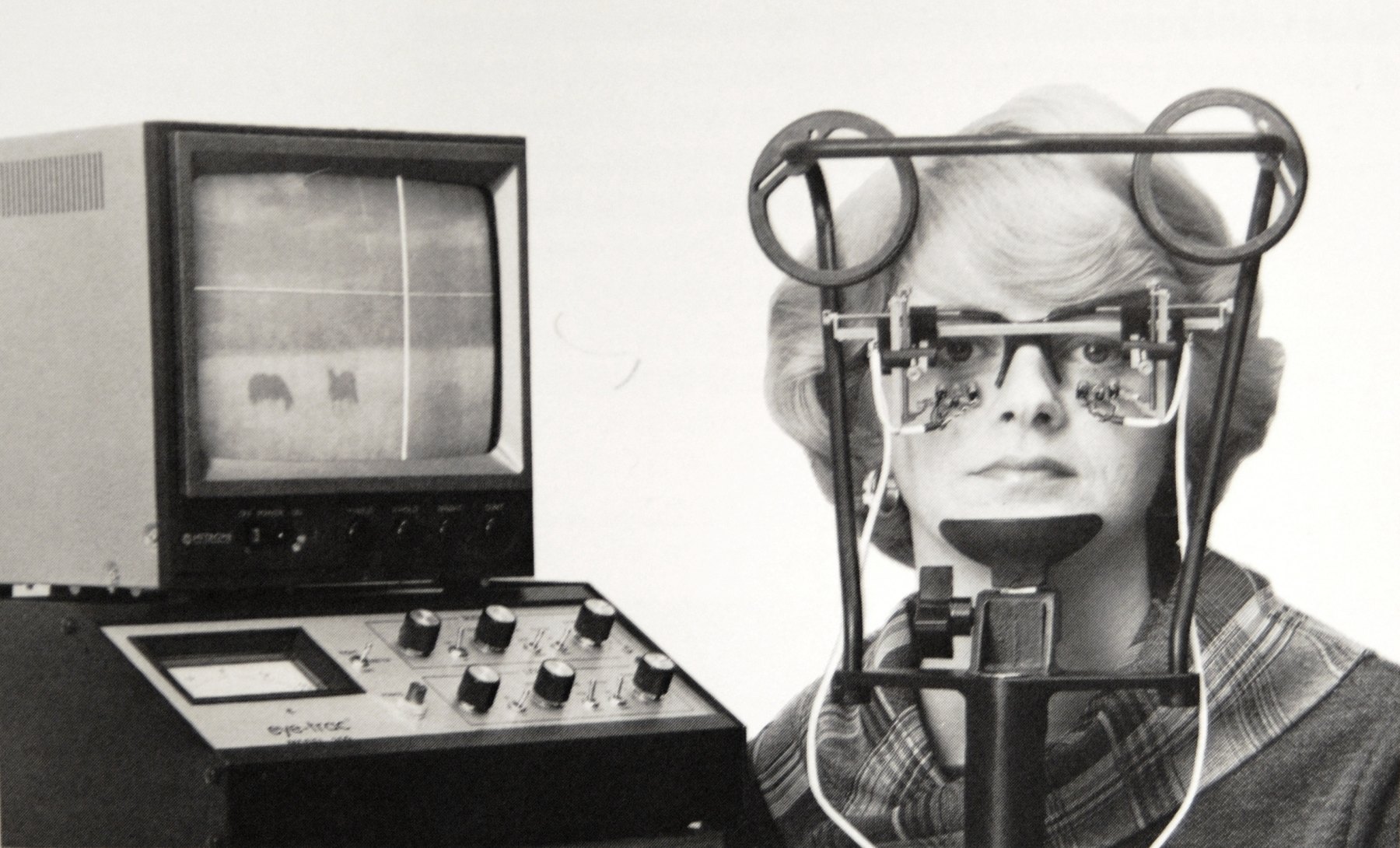
The roots of our technology run back to the 1970s, to a photoelectric based eye tracking device invented by two MIT professors and manufactured by a company called Space Sciences. Space Sciences eventually became Applied Science Laboratories (ASL), one of the companies that created the modern eye tracking field. ASL instruments spent the next decades in cockpits, operating rooms, laboratories, and stadiums around the world. Argus Science was founded in 2016 by people who came from ASL and continue to pursue the same goal: take the frontier of the technology and make it work in the field, not just the lab.
Photoelectric based eye tracker invented by MIT professors and further developed by Space Sciences. Space Sciences also begins making and developing video-based eye trackers.
Applied Science Laboratories further develops video-based eye tracking technology including the first video based, head-mounted eyetrackers, and the first video-based eye trackers to interface with head tracking devices. ASL instruments serve labs, cockpits, and clinics worldwide.
People who were part of the Space Sciences and ASL lineage carry the line forward with ETVision, ET3Space, ETAnalysis and AI LMOT live object recognition. All products are built in Massachusetts.
A few things that define how we build.
Our systems have turned up in places we did not put them.
Questions go straight to our engineers in Massachusetts. Demos are free.
Schedule a demo